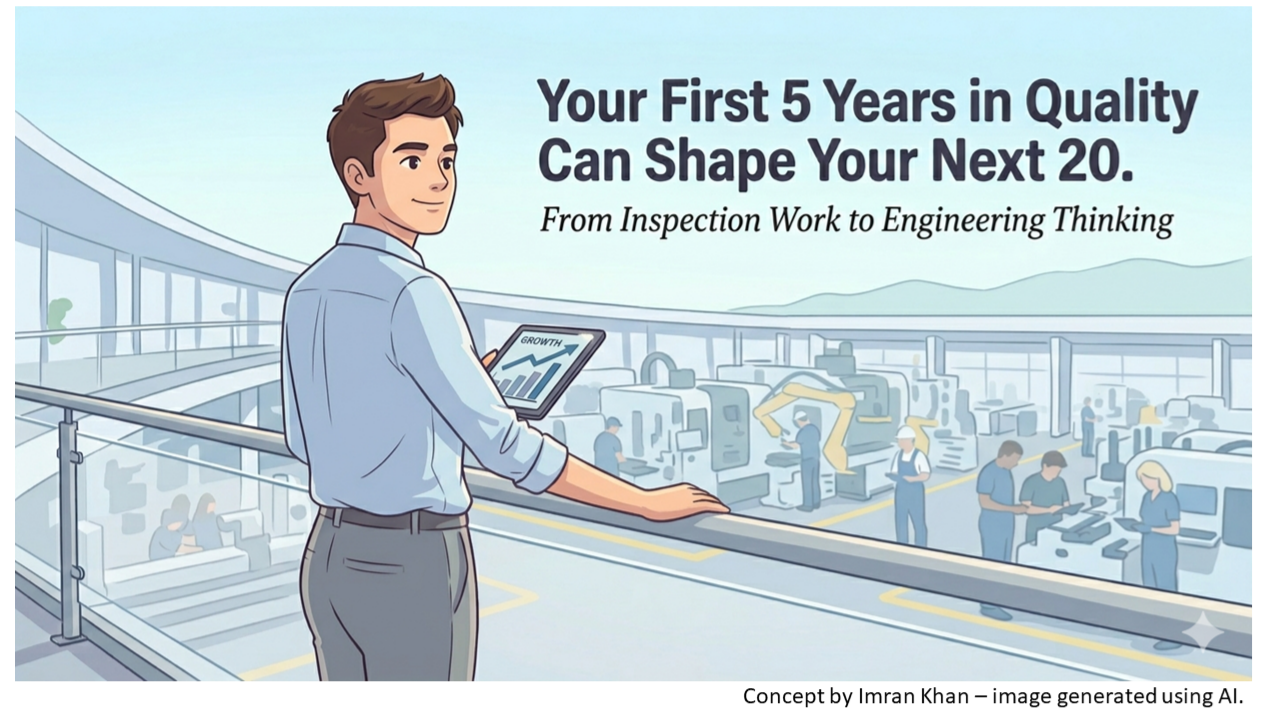
Your First 5 Years in Quality Can Shape Your Next 20.
From Inspection Work to Engineering Thinking
A young quality inspector recently asked me a simple question: “Sir, how do I grow from inspection work into a real Quality Engineering role?”
It was a very relevant question.
Because many people enter Quality through inspection activities such as checking dimensions, filling reports, sorting rejections, line clearance, and basic documentation. But the people who grow faster are usually the ones who move beyond inspection and start understanding process behaviour, variation, risk, customer expectations, problem solving, and why defects happen in the first place.
Inspection can help you enter Quality. But inspection alone may not help you grow for long.
The first 5 years in Quality are usually the most important because they shape the way you think, solve problems, and build your future career. Below are 7 advice points I usually share with young engineers who want to grow faster in Quality.
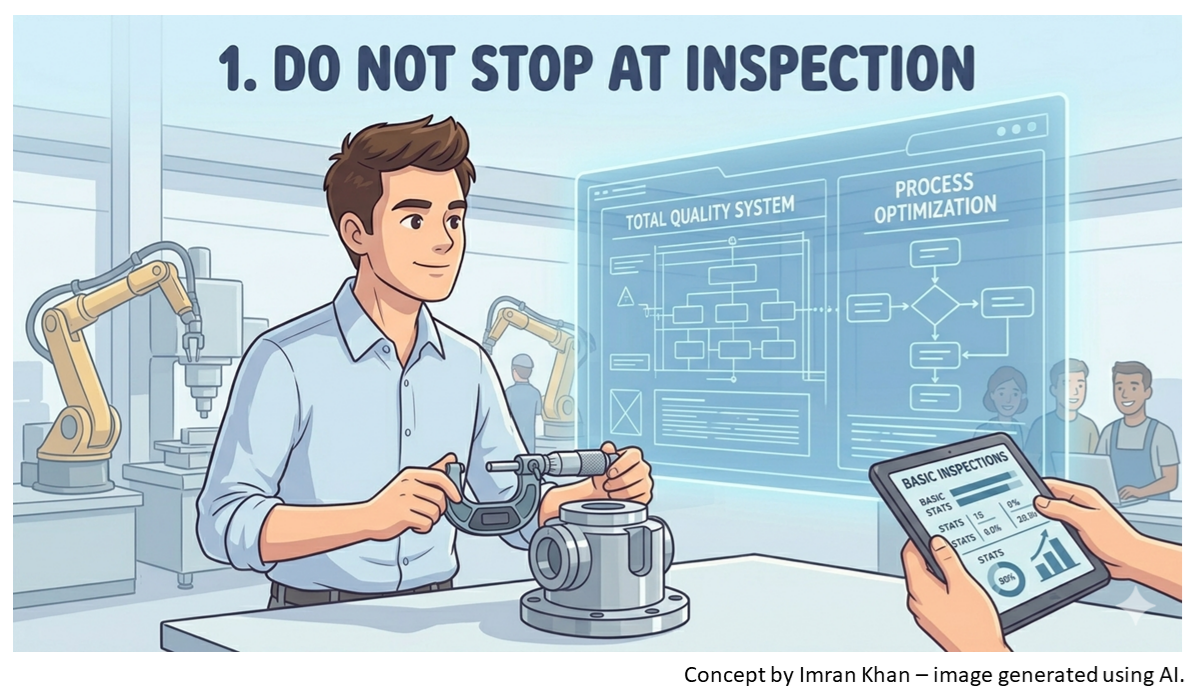
Do Not Stop at Inspection
Most people enter Quality through inspection work. They check dimensions, verify specifications, fill reports, sort rejections, and perform line clearance activities. That is usually where the journey starts. But one thing I always tell young engineers is:
“Inspection can help you enter Quality. But inspection alone may not help you grow for long.”
Because inspection only tells you that a defect exists. It does not tell you why it happened. The real shift happens when you stop asking:
“What is wrong with this part?”
And start asking:
- “Why did this defect happen?”
- “Which process parameter changed?”
- “Was it a machine issue, material issue, method issue, or measurement issue?”
- “How can we prevent this from happening again?”
An inspector may reject a defective part. But a Quality Engineer is expected to understand the reason behind the defect, identify the root cause, and work with the team to prevent repeat issues. That is where real growth starts.
Because companies do not build future leaders from people who only find defects. They build future leaders from people who understand why defects happen in the first place.
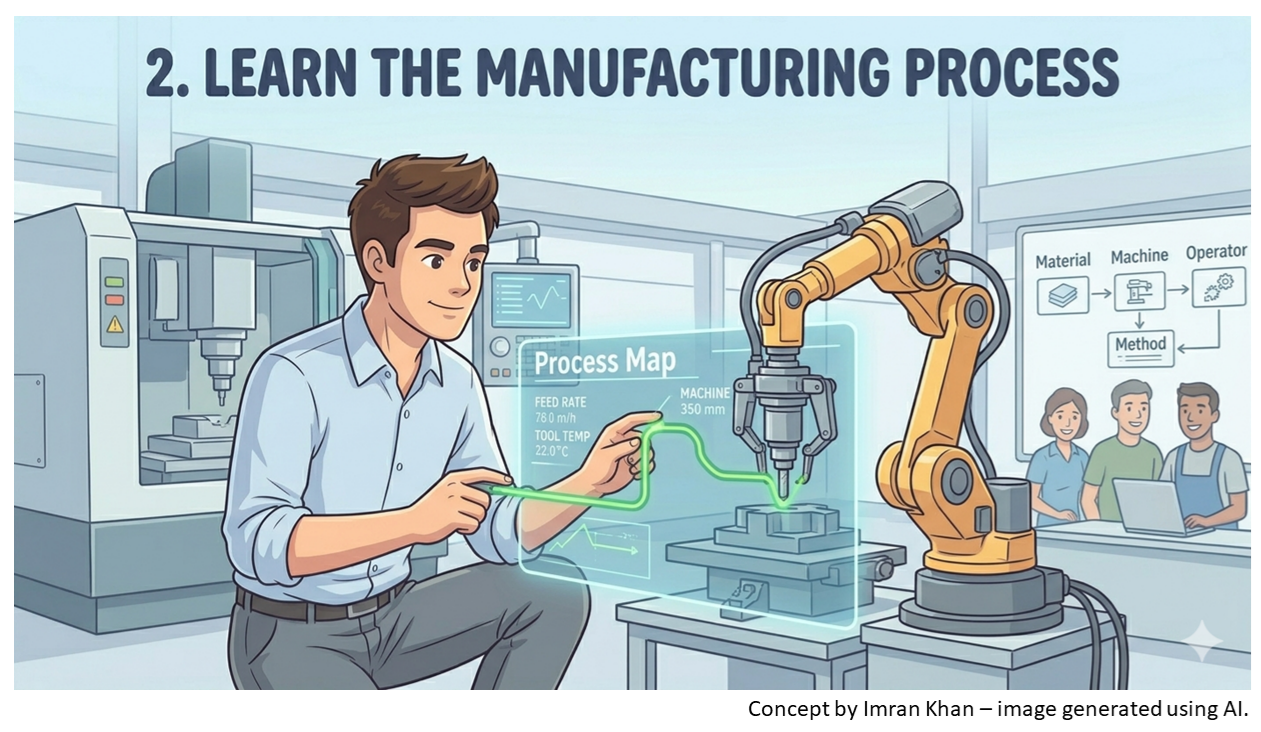
Learn the Manufacturing Process
One common mistake many young engineers make is that they become very good at inspection but never fully understand how the product is actually made. They know the defect. But they do not know the process behind the defect.
That is why it is important to spend time with production teams, operators, maintenance teams, and supervisors.
- Observe the machine settings.
- Understand the sequence of operations.
- See how material flows from one stage to another.
- Learn how tooling, fixtures, machine conditions, and operator methods can affect quality.
One thing I always tell young engineers is:
“If you understand the process, you will understand the defect.”
Because most quality problems do not start in the inspection area. They start much earlier in the process. The better you understand how the product is made, the easier it becomes to identify risks, solve problems, and prevent repeat issues.
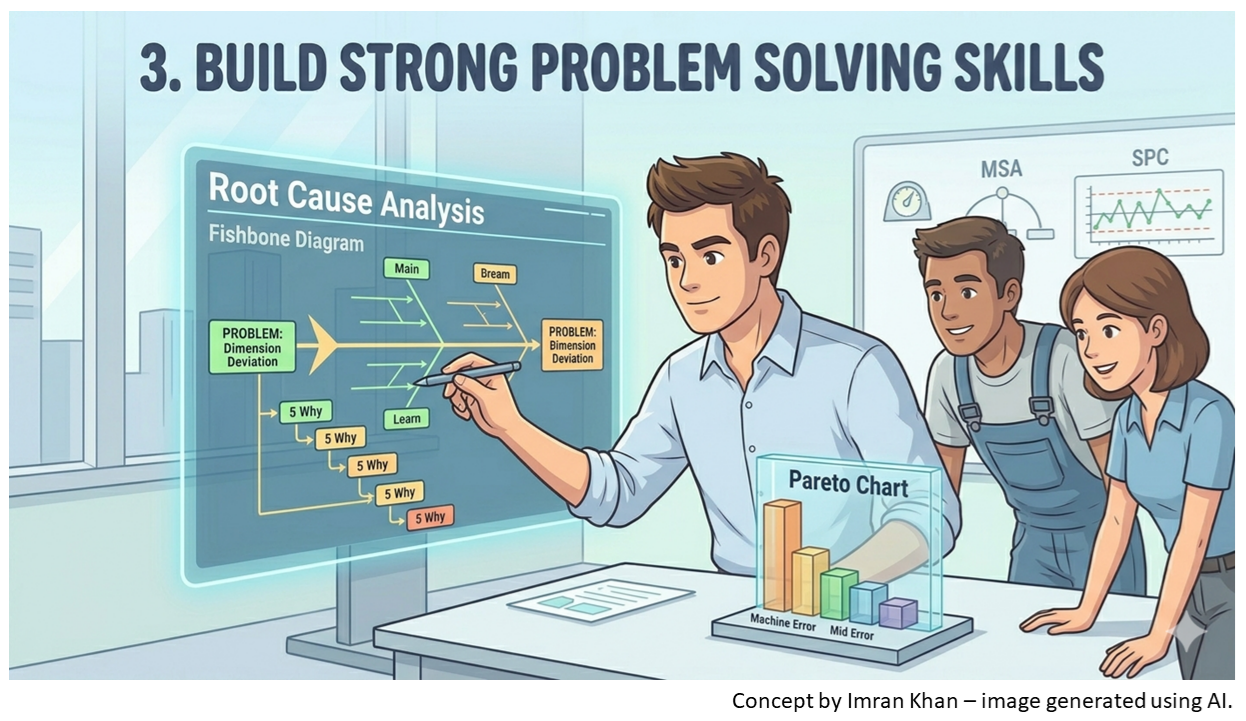
Build Strong Problem Solving Skills
One of the biggest differences between an average Quality Engineer and a strong Quality Engineer is problem solving. Many people become very good at identifying defects, sending emails, and escalating issues.
But long term growth usually comes to the people who know how to solve problems instead of only reporting them. Whenever a defect happens, do not stop at the first answer.
Go deeper.
Because in many cases, what you first see is only the symptom. The real cause is usually hidden in:
- Process variation
- Machine condition
- Material issues
- Incorrect method
- Measurement system errors
- Lack of training
One thing I always tell young engineers is:
“Anybody can say there is a problem. Your value starts when you can explain why it happened and how to stop it from coming back.”
That is why it is important to learn tools such as:
- 5 Why
- Fishbone Diagram
- Pareto Analysis
- SPC
- MSA
- Basic Root Cause Analysis
These tools do not just help you solve defects. They help you think in a more structured and disciplined way. And over time, people start trusting engineers who bring clarity to problems instead of confusion.
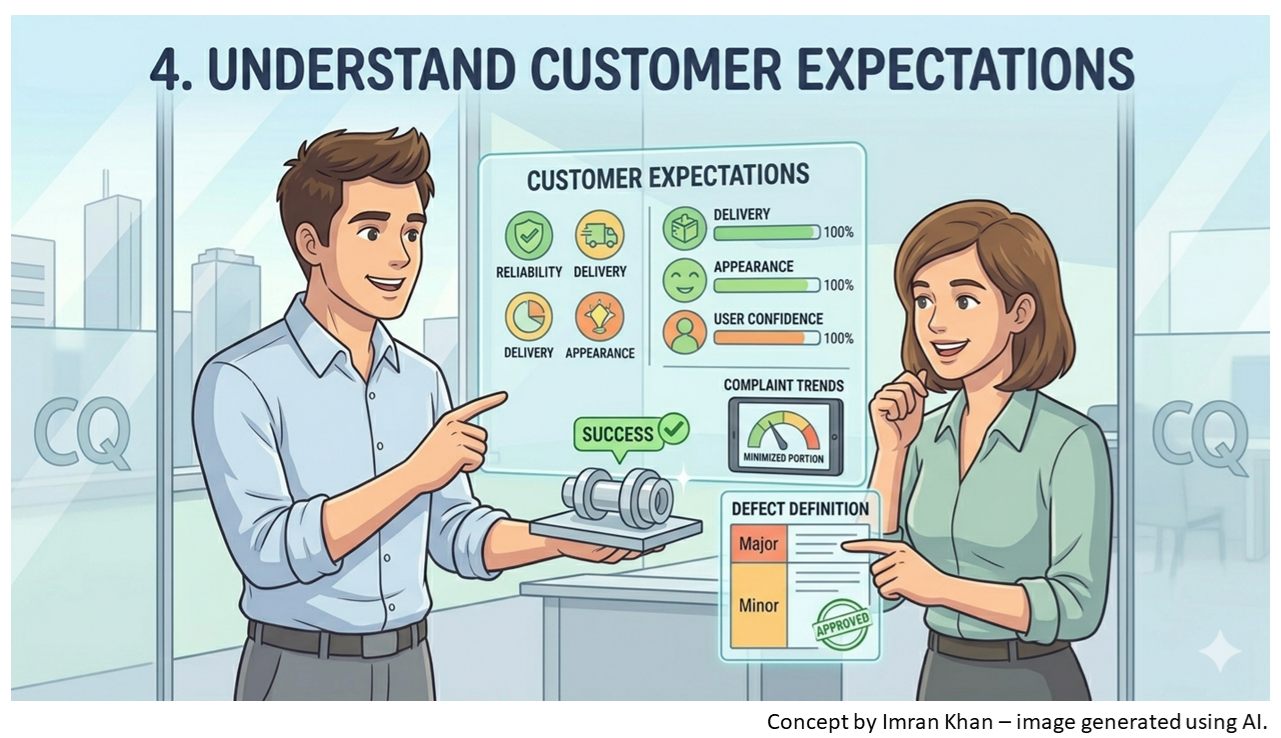
Understand Customer Expectations
Many young engineers focus only on internal defects, rejection numbers, and production targets. But Quality is not only about what is acceptable inside the company. It is about what is acceptable to the customer.
A dimension may be within tolerance.
A report may be complete.
A process may be running.
But if the customer is still unhappy, then Quality has not really been achieved. One thing I always tell young engineers is:
“Your customer may forget the report. But they will not forget the defect.”
That is why it is important to understand:
- Which dimensions are critical for the customer
- Which defects create the highest complaints
- What the customer considers major or minor
- Which delivery, packaging, or appearance issues matter most
- What can affect customer confidence
The earlier you understand customer expectations, the stronger your decisions become. Because good Quality Engineers do not only protect the process. They also protect customer trust.
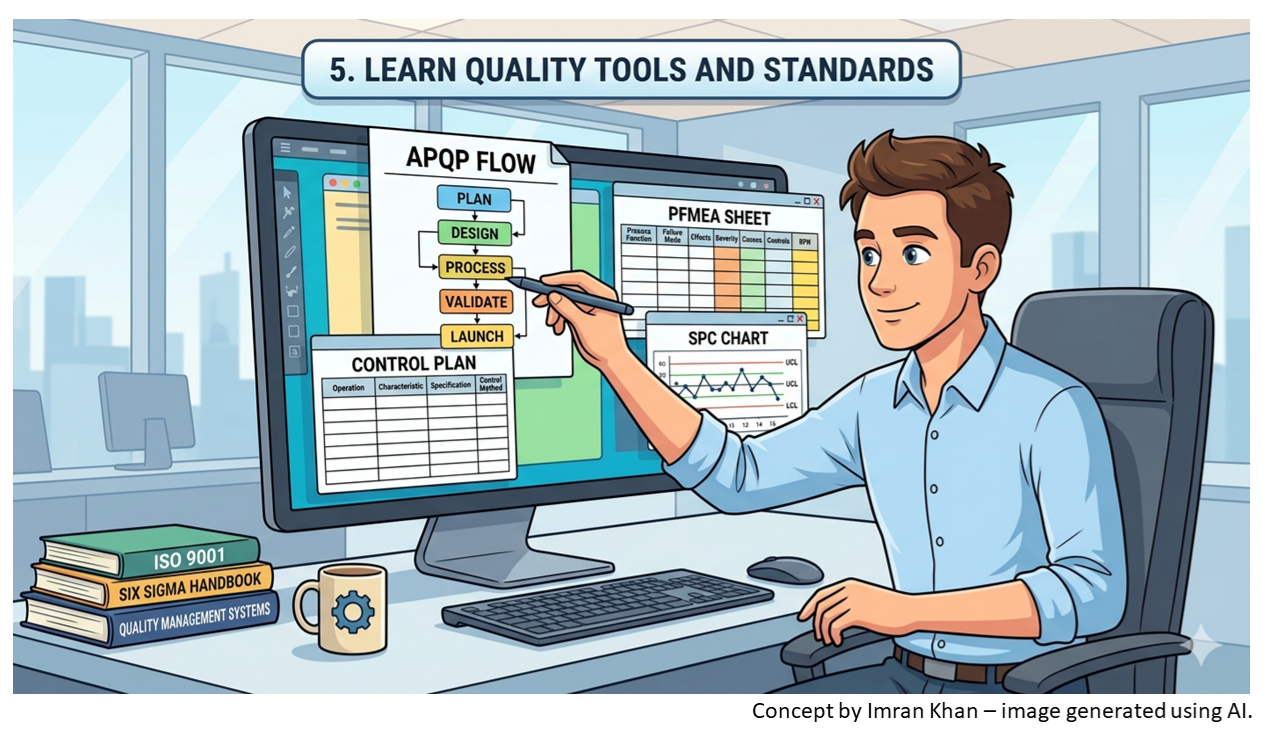
Learn Quality Tools and Standards
Many young engineers delay learning Quality tools because they think those activities are only for senior people. But the earlier you start learning them, the faster you usually grow. You do not need to become an expert in everything immediately.
But you should at least start understanding the purpose behind the tools and where they are used. One thing I always tell young engineers is:
“Do not wait for your designation to change before you start learning. Start learning first and the designation will follow.”
Try to build exposure to tools such as:
- Control Plan
- PFMEA
- APQP
- PPAP
- SPC
- MSA
- Layered Process Audit
- 8D
- Basic audit requirements
At first, these tools may look difficult. But over time, they help you understand risk, variation, prevention, customer expectations, and process control in a much better way. And in many organizations, the people who understand these tools are usually the ones who move faster into bigger Quality roles.

Improve Communication Skills
Many young engineers think technical knowledge alone is enough to grow in Quality. But after a point, communication becomes equally important. Because Quality professionals work with production, maintenance, suppliers, customers, stores, logistics, and management teams.
You may know the problem very well.
But if you cannot explain it clearly, convince people, or present it in a practical way, then action may never happen. One thing I always tell young engineers is:
“A good engineer knows the problem. A strong engineer can make others understand it as well.”
That is why communication skills matter in areas such as:
- Explaining defects clearly
- Presenting data and trends
- Handling customer complaints
- Leading meetings
- Writing reports
- Convincing teams to take action
- Discussing issues without creating conflict
Many future leaders stand out not only because they know more. They stand out because they know how to communicate better.
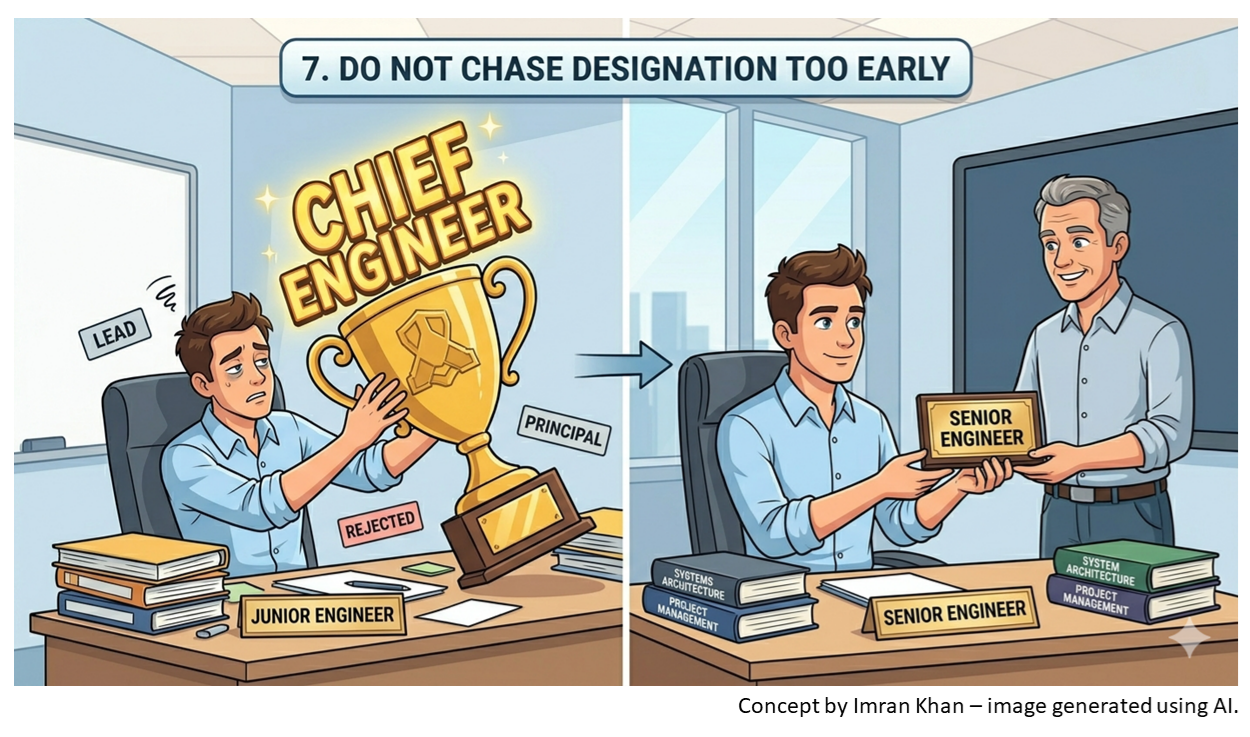
Do Not Chase Designation Too Early
Many young engineers become too focused on designation, salary, and job title in the first few years of their career. Those things are important. But if you focus only on title without building capability, growth may become slow after a point.
The first few years should be used to build exposure, learn different quality activities, strengthen problem solving, and become comfortable with difficult situations. One thing I always tell young engineers is:
“Do not spend your first 5 years trying to look senior. Spend them trying to become valuable.”
That means saying yes to opportunities such as:
- Customer complaint discussions
- Supplier visits
- Internal audits
- Shopfloor problem solving
- New project activities
- Documentation work
- Cross functional meetings
- Learning new tools and standards
Because two people can spend the same 5 years in Quality and still reach very different levels. One may spend those years only doing routine work. The other may spend those years building capability. And in the long run, capability usually matters more than designation.
Many people start in Quality through inspection work.
But long term success comes when you move beyond checking parts and start understanding systems, processes, risk, variation, customer expectations, and prevention.
Your first 5 years in Quality can shape your next 20.
Use them wisely.
For those who started their career in inspection:
What was the one thing that helped you move towards a bigger Quality role?
#QualityEngineering #QualityInspector #QualityManagement #ManufacturingQuality #QualityControl #ProblemSolving #RootCauseAnalysis #SPC #MSA #PFMEA #ControlPlan #APQP #PPAP #LeanManufacturing #ContinuousImprovement #CareerGrowth #EngineeringCareer #YoungEngineers #ShopfloorLearning #OperationalExcellence