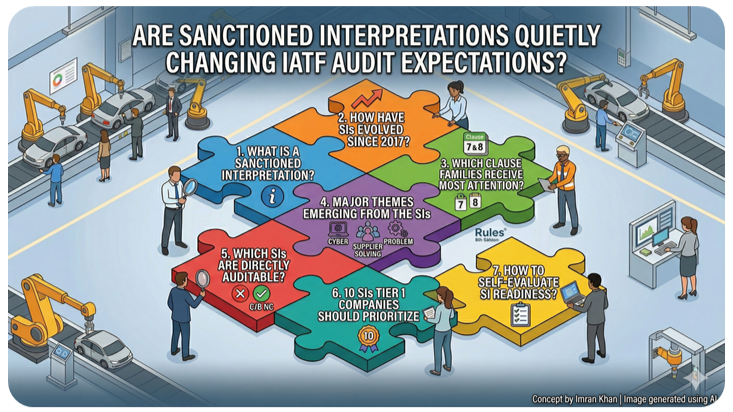
30 Sanctioned Interpretations. Nearly half focused on Clause 7 and Clause 8. Yet many organizations still audit only against the original wording of the standard.
Since the release of IATF 16949:2016, the International Automotive Task Force has issued 30 Sanctioned Interpretations that have gradually changed how several requirements are expected to be implemented and audited. Many of these changes are not minor clarifications. They directly affect contingency planning, cybersecurity, supplier development, auditor competency, temporary process changes, control plans, problem solving, and even the definition of automotive products themselves.
What is interesting is that the highest concentration of SIs is not around documentation or policy clauses. Most are linked to shop-floor execution, supplier controls, internal audits, laboratory management, and operational risk management. This raises an important question for many organizations: are they still auditing against the original text of the standard, while certification bodies are increasingly auditing against the latest Sanctioned Interpretations?
1. What Is a Sanctioned Interpretation?
“A Sanctioned Interpretation does not create a new requirement. It changes how an existing requirement is expected to be understood and audited.”
A Sanctioned Interpretation, commonly referred to as an SI, is an official clarification issued by the International Automotive Task Force to explain how a specific requirement of IATF 16949 is expected to be interpreted and implemented.
Many organizations still treat SIs as supporting information or optional reading. In reality, they are far more important than that.
An SI does not add a new clause to the standard. However, it changes the interpretation of an existing requirement. Once issued, that interpretation becomes auditable. This means an organization may still be following the original wording of the standard, but if it has not aligned with the latest SI, it can still receive a nonconformity during an audit.
Why Does This Matter?
This is one of the main reasons why some organizations are surprised during certification body audits. Their internal procedures, audit checklists, PFMEAs, Control Plans, training material, or contingency plans may still be based on the original wording of the standard, while the auditor is already assessing against the latest Sanctioned Interpretation.
For example, many organizations may not have originally considered cyber-attacks as part of:
- Contingency planning
- Risk analysis
- Plant and equipment planning
- Employee awareness and competency
However, after the relevant SIs were issued, these expectations effectively became part of the audit scope.
SI vs Other IATF Documents
It is also important to understand that SIs are different from other IATF supporting documents.
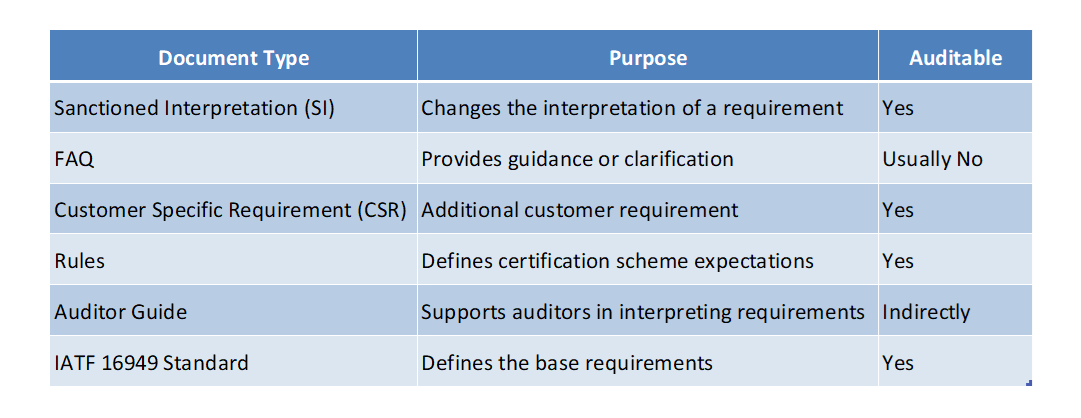
A Practical Way to Think About It
“If the standard tells an organization what to do, a Sanctioned Interpretation often tells it exactly how auditors expect it to be done.”
That is why organizations that only read the standard may still fall behind audit expectations.
In many cases, the real gap is not between the organization and the standard. The real gap is between the organization and the latest interpretation of the standard.
2. How Have Sanctioned Interpretations Evolved Since 2017?
When IATF 16949:2016 was first introduced, many organizations, auditors, and certification bodies faced challenges in interpreting some of the new requirements consistently.
This is one of the main reasons why 2017 saw the highest number of Sanctioned Interpretations.
Number of SIs Issued by Year
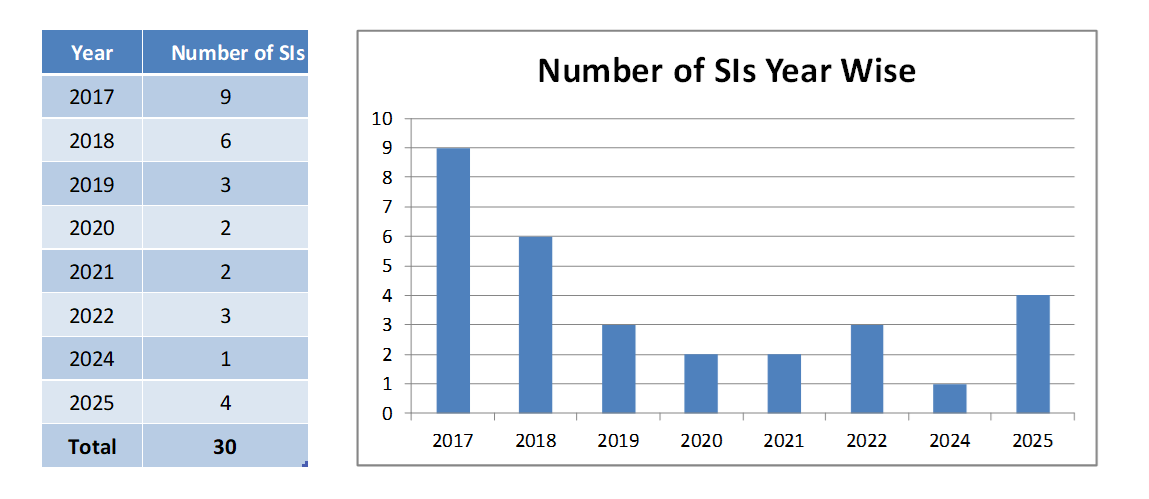
In the early years, most SIs focused on removing ambiguity from the original wording of the standard. Many of these were linked to core topics such as:
- Product safety
- Special characteristics
- Supplier development
- Temporary process changes
- Management review
- Internal audit competency
However, over time, the focus of SIs started to change.
From Clarification to Risk Management
“The early SIs helped organizations understand the standard. The recent SIs are helping organizations survive new risks.”
Recent SIs are no longer limited to wording clarification. They are increasingly focused on operational risk, business continuity, cybersecurity, software-driven products, supplier resilience, and audit effectiveness.
For example:
- Cybersecurity is now linked to contingency planning, risk analysis, equipment planning, and employee awareness
- Supplier development is now expected to follow a more structured progression model
- Problem solving is no longer limited to containment and corrective action; it must also prevent recurrence
- Control plans are now expected to support highly automated manufacturing systems
- Automotive product definitions now include accessory parts, service parts, remanufactured parts, and embedded software
A Second Wave Started in 2025
The 2025 SIs are particularly important because they indicate a new shift in IATF thinking.
“The first wave of SIs clarified the standard. The latest wave is expanding the scope of what automotive quality means.”
Several of the latest SIs are linked to:
- Rules 6th Edition alignment
- Automotive product definitions
- Accessory and aftermarket parts
- Embedded software
- Design outputs
- Scope clarification
This suggests that future audit expectations may increasingly move beyond traditional manufacturing controls and start covering the wider lifecycle of automotive products, including software, services, and post-production activities.
3. Which Clause Families Have Received the Most Attention?
One of the easiest ways to understand where the biggest audit risks exist is to look at which clause families have received the highest number of Sanctioned Interpretations.
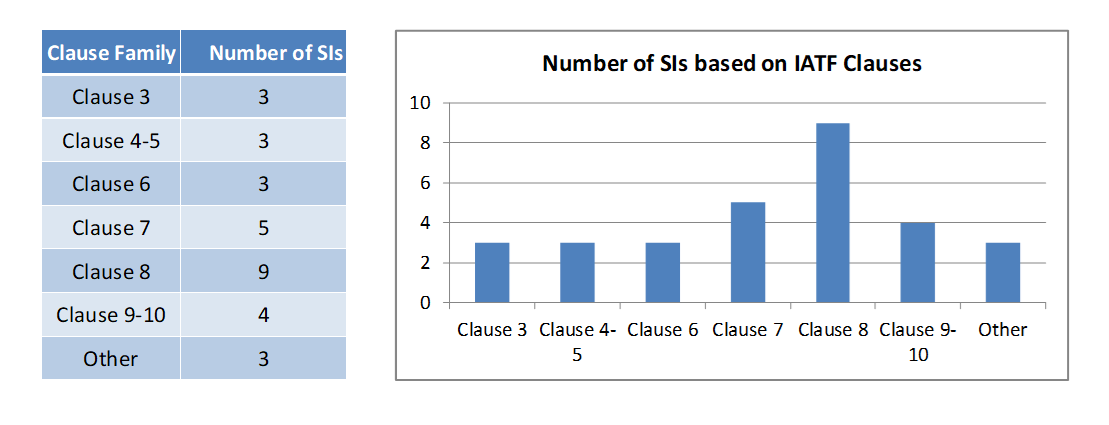
The data clearly shows that Clause 8 has received the highest attention, followed by Clause 7. Together, Clause 7 and Clause 8 account for almost half of all SIs issued so far.
“The biggest audit risks are not in policy documents. They are in operational execution.”
Why Does Clause 8 Dominate?
Clause 8 covers the day-to-day operational activities that directly affect product conformity and customer satisfaction.
This includes:
- Supplier management
- Supplier development
- Special characteristics
- Temporary process changes
- Customer concessions
- Control plans
- Product and process conformity
- Design outputs
These are areas where organizations often struggle because they involve multiple functions, fast decision making, and strong shop-floor discipline.
For example:
- A temporary process change may be implemented without customer approval
- A supplier may have ISO 9001 certification but no clear development roadmap toward IATF 16949
- A control plan may not reflect actual shop-floor controls
- A concession may be approved internally without customer authorization
- A special characteristic may appear in PFMEA but not in operator instructions
Why Is Clause 7 Also Important?
Clause 7 may not appear as operational as Clause 8, but many of the foundational system weaknesses begin here.
Clause 7-related SIs focus on:
- Internal auditor competency
- External laboratory requirements
- Employee awareness
- Plant and equipment planning
- QMS documentation
- Cybersecurity awareness
“Weak Clause 7 controls usually become stronger Clause 8 problems later.”
For example:
- An unqualified auditor may fail to identify a weak Control Plan
- A poorly managed external laboratory may affect calibration credibility
- Employees may not recognise signs of a cyber-attack or equipment failure
- Manufacturing equipment may not be protected against cyber threats
What Does This Mean for Organizations?
The SI distribution shows that organizations should spend less time debating wording and more time strengthening execution.
The areas most likely to create future audit findings are:
- Supplier controls
- Internal audit effectiveness
- Laboratory management
- Temporary changes
- Problem solving
- Control plans
- Design outputs
- Cybersecurity
- Competency and awareness
In short, the biggest future risk is not misunderstanding the standard. It is failing to implement it consistently on the shop floor.
4. What Are the Major Themes Emerging from the SIs?
When the 30 SIs are reviewed together, a few clear themes begin to emerge. These themes also highlight where many organizations continue to struggle during implementation and audits.
“The SIs are not random. They consistently point towards the same weak areas in most automotive quality management systems.”
4.1 Supplier Management and Supplier Development
Supplier-related SIs continue to focus on one common expectation: organizations must manage suppliers based on risk, not only based on certification status.
Relevant SIs:
- SI 7
- SI 8
- SI 19
These SIs clarify that organizations are expected to:
- Control pass-through characteristics
- Define supplier development roadmaps
- Escalate or reduce supplier controls based on risk
- Monitor supplier performance using meaningful indicators
- Move suppliers progressively from ISO 9001 toward IATF 16949 maturity
Many organizations still rely too heavily on supplier certificates and scorecards, without assessing actual process risks.
“A supplier with a certificate is not always a capable supplier.”
4.2 Cybersecurity, Risk Analysis and Business Continuity
Cybersecurity is one of the strongest themes emerging from the recent SIs.
Relevant SIs:
- SI 3
- SI 17
- SI 18
- SI 21
- SI 22
The major message is clear: cybersecurity is no longer only an IT issue.
Organizations are now expected to include cyber threats in:
- Risk analysis
- Contingency planning
- Equipment and plant planning
- Employee awareness
- Business continuity testing
For example, a ransomware attack that stops production, damages logistics systems, or blocks customer communication can now directly affect conformity to IATF requirements.
“A cyber-attack can stop production just as easily as a machine breakdown or fire.”
4.3 Internal Audits, Competency and Audit Frequency
Several SIs show that organizations still struggle with the quality of their internal audit systems.
Relevant SIs:
- SI 4
- SI 14
These SIs reinforce that:
- Different types of auditors need different competencies
- Process auditors need process knowledge, not only audit training
- Product auditors need measurement and inspection knowledge
- Audit frequencies should be based on risk and performance
- All processes must still be covered within a three-year cycle
Many internal audit systems still focus too much on clause compliance and not enough on process risk.
“An internal audit should not only confirm that a process exists. It should confirm that the process is capable, effective, and controlled.”
4.4 Problem Solving and Prevention of Recurrence
Problem solving continues to be one of the most common areas of weakness in automotive organizations.
Relevant SI:
- SI 20
This SI makes it clear that corrective action is not complete until recurrence prevention has been addressed.
Many organizations still stop at:
- Containment
- Root cause
- Corrective action
But they do not always:
- Assess similar processes
- Update PFMEA
- Revise Control Plans
- Modify standard work
- Check whether the same risk exists elsewhere
“If the same problem can happen somewhere else, the root cause has not been fully addressed.”
4.5 Temporary Changes, Control Plans and Shop-Floor Discipline
Several SIs highlight weaknesses in day-to-day shop-floor controls.
Relevant SIs:
- SI 6
- SI 9
- SI 11
- SI 24
- SI 25
These SIs reinforce the need for organizations to:
- Properly identify and cascade special characteristics
- Maintain approved backup controls for temporary changes
- Obtain customer approval for concessions and rework
- Keep Control Plans aligned with actual process controls
- Adapt Control Plans for highly automated processes
These topics often create audit findings because the documented controls do not match what is actually happening on the shop floor.
“The most common gap is not missing documentation. It is documentation that does not reflect reality.”
4.6 Design Outputs, Embedded Software and Automotive Product Definitions
The latest SIs show that IATF expectations are gradually expanding beyond traditional manufacturing.
Relevant SIs:
- SI 15
- SI 29
- SI 30
These SIs introduce stronger focus on:
- Embedded software
- Accessory parts
- Service parts
- Remanufactured parts
- Automotive product definitions
- Design outputs for software-driven products
This is especially important for EVs, SDVs, ADAS systems, connected vehicles, and software-enabled components.
“Automotive quality is no longer limited to physical parts. It now includes software behaviour, serviceability, and lifecycle performance.”
5. Which Sanctioned Interpretations Are Directly Auditable?
One of the biggest misconceptions about Sanctioned Interpretations is that they are only advisory in nature.
That is not true.
Once issued, an SI changes the interpretation of the original requirement. This means it becomes part of the audit criteria.
Auditable vs Non-Auditable SIs
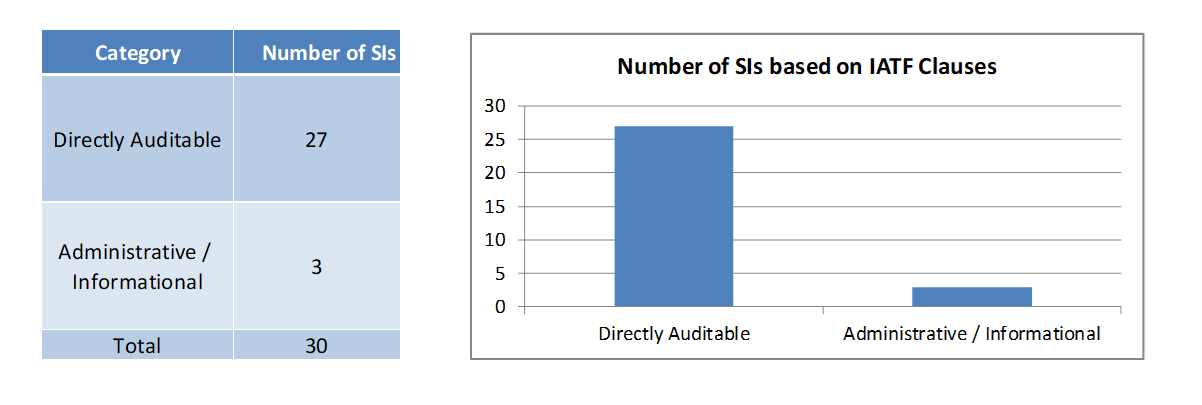
The vast majority of SIs are directly linked to auditable requirements. Only a small number are administrative or informational in nature, such as:
- SI 26 – Copyright notice
- SI 27 – Foreword clarification
- SI 28 – Scope clarification
All other SIs can directly influence audit findings.
What Makes an SI Auditable?
An SI becomes auditable when it changes:
- The interpretation of a clause
- The expected evidence
- The required controls
- The level of detail expected by auditors
- The definition of conformity
For example:
- SI 3 makes cyber-attacks part of contingency planning expectations
- SI 4 changes auditor competency expectations
- SI 8 changes supplier development expectations
- SI 11 changes expectations around temporary process controls
- SI 20 changes expectations around prevention of recurrence
- SI 30 expands design output expectations
“Many organizations still believe they are compliant because they meet the original clause wording. But auditors are increasingly assessing against the latest interpretation of that wording.”
Why This Creates Audit Risk
This is where many organizations get caught during surveillance or recertification audits. Their procedures, forms, internal audit checklists, and training material may still reflect the original version of the clause, while the auditor is already looking for evidence against the SI.
Typical examples include:
- No cyber risk included in contingency plans
- No evidence of internal auditor technical competency
- No supplier development roadmap
- No risk-based audit frequency
- No backup process controls identified
- No evidence of recurrence prevention after corrective action
- No link between highly automated controls and Control Plans
“The gap is often not between the organization and the standard. The gap is between the organization and the latest Sanctioned Interpretation.”
This is why organizations should not only monitor new SIs, but also systematically review how each SI affects their procedures, forms, audit checklists, PFMEAs, Control Plans, and training systems.
6. Which 10 SIs Should Tier 1 Companies Prioritise First?
Not all Sanctioned Interpretations carry the same level of operational risk.
Some are more administrative, while others can directly influence supplier performance, production continuity, customer satisfaction, or certification outcomes.
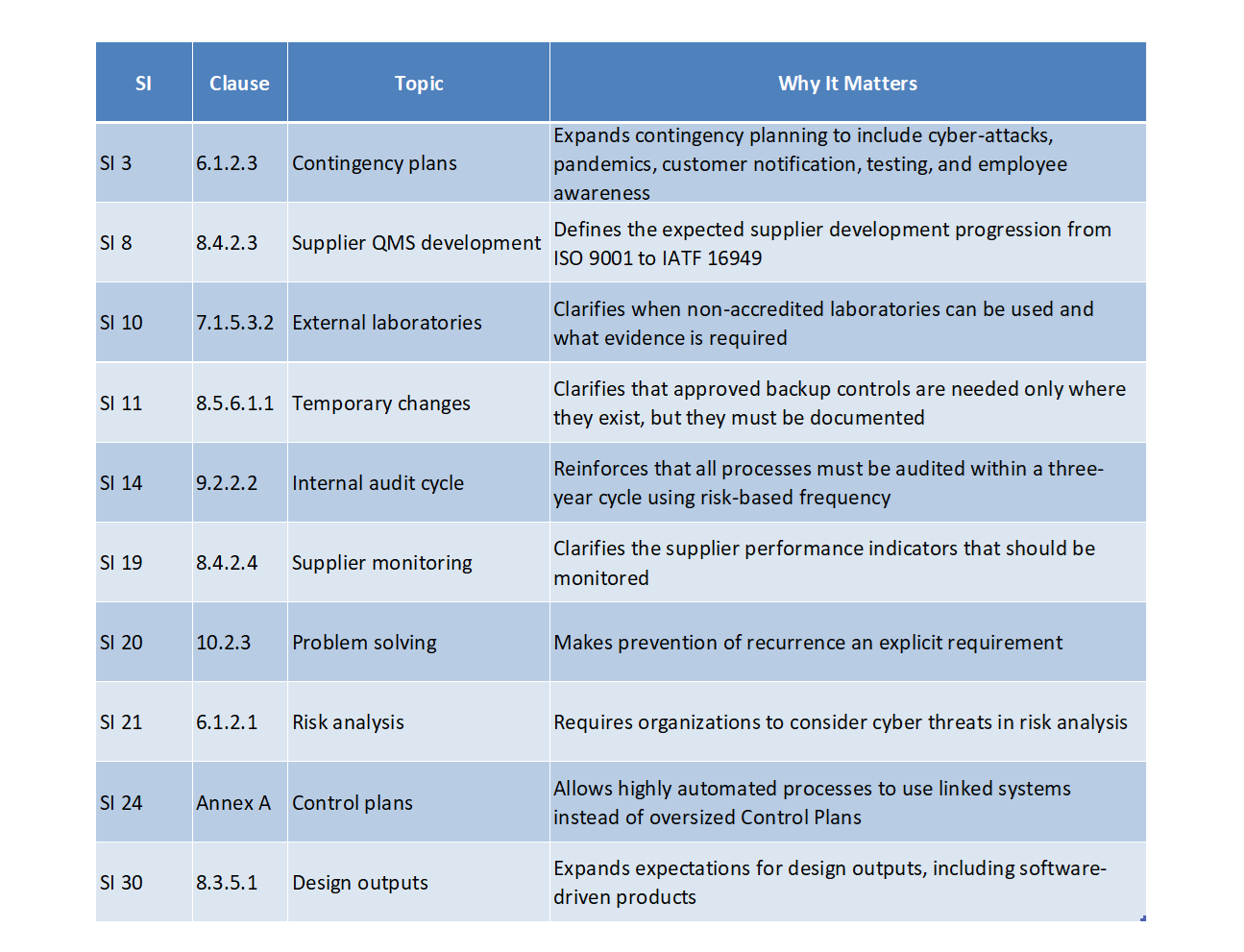
For Tier 1 companies, the following 10 SIs are likely to have the highest impact.
“The most important SIs are usually the ones that affect multiple functions at the same time.”
Why These SIs Matter More Than Others
These SIs should be prioritised because they affect multiple departments simultaneously, including:
- Quality
- Manufacturing
- Supplier Quality
- Engineering
- Maintenance
- IT
- Purchasing
- Internal Audit
- Program Management
For example:
- SI 3 affects quality, IT, maintenance, HR, production, and supply chain teams
- SI 8 affects supplier quality, purchasing, sourcing, and supplier development teams
- SI 20 affects quality, manufacturing, customer complaints, warranty, and engineering
- SI 30 affects engineering, software teams, program management, testing, and service teams
Common Audit Gaps Linked to These SIs
Many organizations still show recurring gaps in these areas:
- Contingency plans do not include cyber-attacks
- Supplier development plans are not risk-based
- Non-accredited laboratories are used without documented justification
- Temporary process changes are not formally approved
- Internal audit frequencies are fixed and not risk-based
- Corrective actions stop at containment and root cause
- Control Plans do not reflect actual automated controls
- Design outputs for embedded software are incomplete
“Many organizations know these topics are important. The challenge is that they are often spread across multiple functions, so no single owner sees the complete picture.”
For that reason, these 10 SIs are often the best starting point for any internal readiness assessment or gap analysis exercise.
7. How Can Organizations Self-Evaluate Their SI Readiness?
Understanding the Sanctioned Interpretations is only the first step.
The bigger challenge is determining whether they have actually been implemented within the organization.
Many companies assume they are compliant because the relevant clause exists in a procedure or checklist. However, the real question is whether the SI expectation has been translated into day-to-day practice.
“The presence of a procedure does not always mean the requirement has been implemented.”
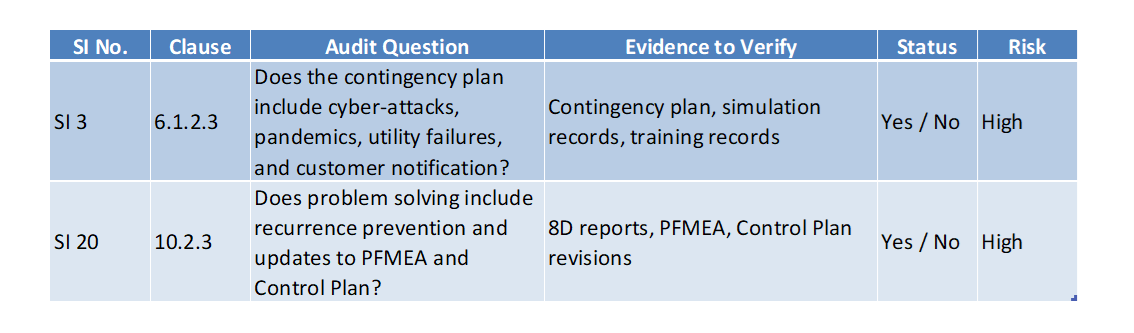
A practical way to assess readiness is to conduct a focused SI-based internal audit.
This type of audit is different from a normal clause-by-clause audit. Instead of only checking whether the clause exists, the auditor specifically checks whether the latest Sanctioned Interpretation has been implemented.
Why an SI-Based Internal Audit Checklist Is Useful
Many organizations already have internal audit checklists based on the original wording of IATF 16949.
The problem is that these checklists are often not updated when a new SI is issued.
As a result:
- Cybersecurity risks may not be checked during contingency plan audits
- Internal auditor competency may not be evaluated in sufficient detail
- Supplier development may still be assessed only through certification status
- Temporary process changes may be reviewed without checking backup controls
- Problem solving may focus only on containment and corrective action
- Control Plans may be reviewed without checking MES or automated controls
“If the checklist is outdated, the audit will also be outdated.”
Sample SI Audit Checklist
What Will the Full Checklist Include?
The full SI self-evaluation checklist will cover all auditable SIs and include topics such as:
- Contingency plans
- Cybersecurity
- Supplier development
- Supplier monitoring
- Internal auditor competency
- External laboratories
- Temporary changes
- Concessions and rework
- Control Plans
- Problem solving
- Design outputs
- Embedded software
- Automotive product definitions
The full checklist will also include:
- Audit questions
- Expected evidence
- Risk ranking
- Gap identification
- Action tracking
- Responsible function
- Target date
“Many organizations know the clause. Far fewer know how to audit the Sanctioned Interpretation behind it.”
Availability of the Full Checklist
The complete SI Self-Evaluation Checklist covering all auditable SIs will be shared exclusively with first-degree connections.
This is intended to help organizations perform a practical readiness review before their next internal, customer, surveillance, or recertification audit.
“Sometimes the easiest way to improve audit readiness is to ask better audit questions.”
Conclusion
Sanctioned Interpretations are no longer minor clarifications sitting in the background of IATF 16949. They are actively shaping how organizations are audited and how certification bodies interpret compliance expectations.
The trend is also clear. Early SIs focused mainly on clarifying the wording of the standard. Recent SIs are much more focused on operational risk, cybersecurity, supplier resilience, software-driven products, business continuity, and audit effectiveness.
“The future audit risk is no longer only about not meeting the clause. It is about not meeting the latest interpretation of the clause.”
Organizations that continue to rely only on the original wording of the standard may gradually fall behind current audit expectations. On the other hand, organizations that actively review SIs, update their internal audit checklists, revise their procedures, and strengthen cross-functional awareness will be much better prepared for:
- Internal audits
- Customer audits
- Surveillance audits
- Recertification audits
- Supplier audits
In many cases, the difference between a strong audit result and a major nonconformity is not the clause itself. It is whether the organization has understood and implemented the latest Sanctioned Interpretation.
“The organizations that treat SIs as early warning signals will usually be the ones that stay ahead of future audit findings.”
Which Sanctioned Interpretation has created the biggest challenge in your organization?