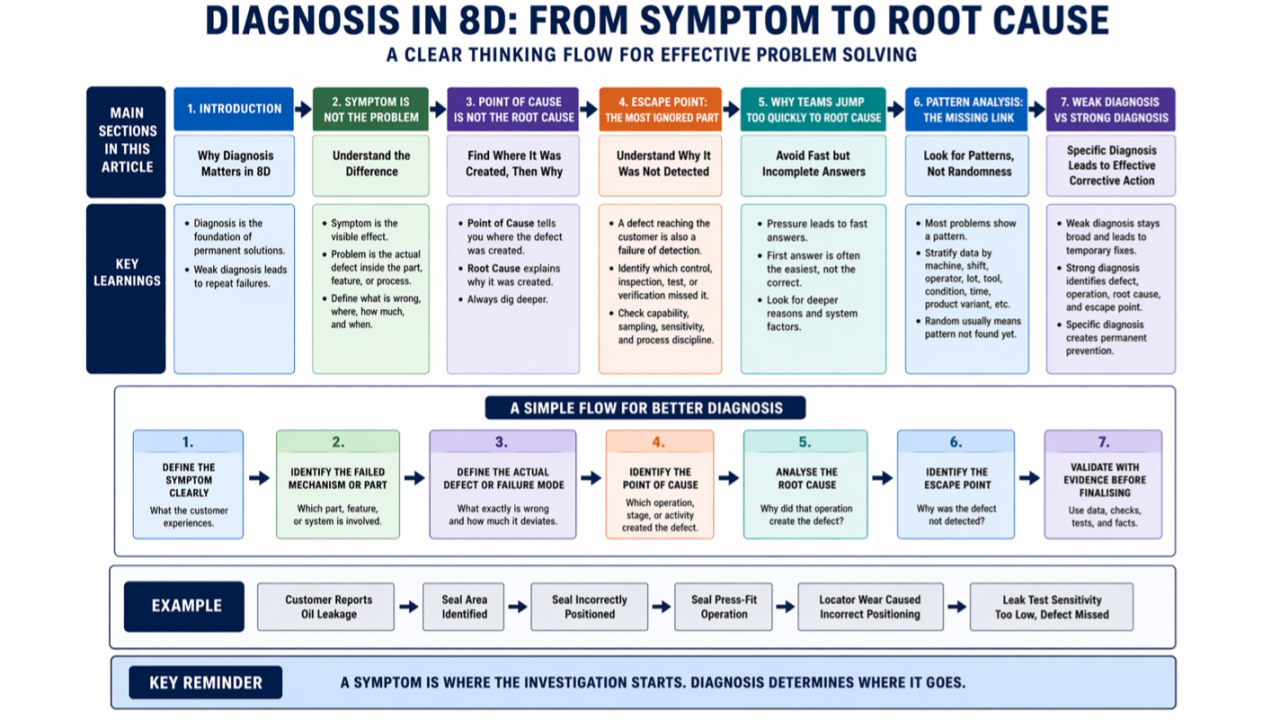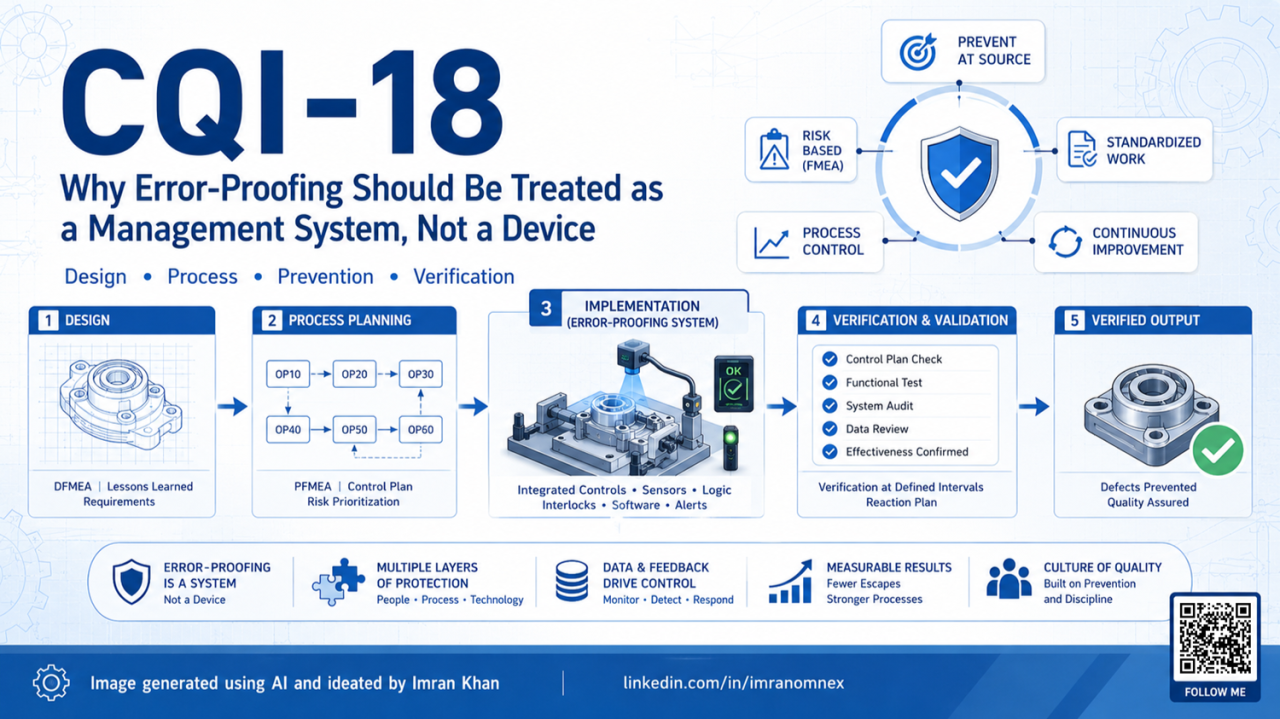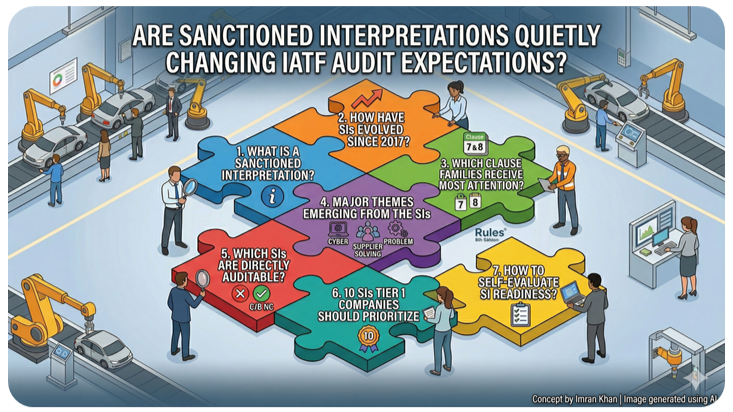
In many IATF 16949 audits and 8D reports, organizations still write “operator mistake” as the root cause. But if another operator can make the same mistake tomorrow, then the problem is not the operator. The problem is the system.
1. Introduction
In many manufacturing organizations, especially during customer complaints, internal rejection analysis, warranty issues, and IATF 16949 audits, one statement appears very frequently:
“Operator made a mistake.”
Sometimes that may be true. But in many situations, the operator is only the last person in the chain where the issue became visible.
The real causes are often much deeper.
The operator may not have received proper training. The work instruction may be unclear. The workstation may be poorly designed. Similar-looking parts may create confusion. Tools, fixtures, gauges, or visual controls may be weak. Supervisors may not have identified the risk early enough.
This is where HERCA becomes important.
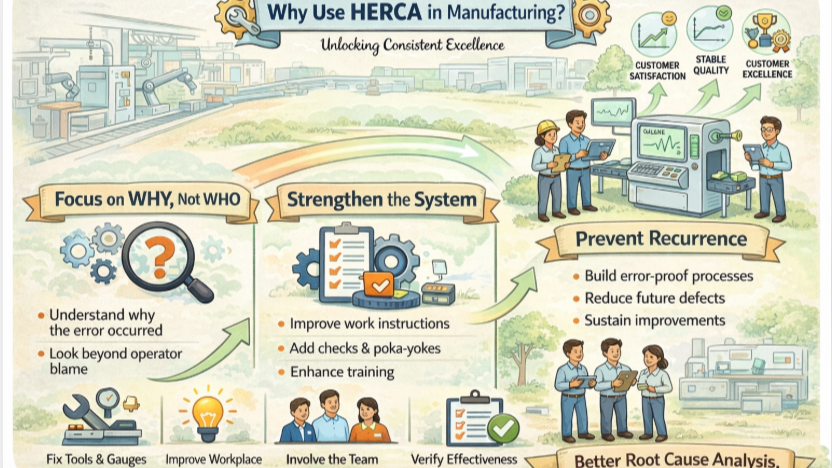
HERCA, which stands for Human Error Root Cause Analysis, is a structured approach used in World Class Manufacturing (WCM) to investigate why a human error became possible in the first place.
Instead of blaming people immediately, HERCA pushes organizations to look at the entire system around the operator.
This makes it highly relevant for organizations implementing IATF 16949 because the standard expects companies to move beyond containment and identify true systemic causes behind defects, escapes, and nonconformities.
2. What is HERCA?
HERCA stands for Human Error Root Cause Analysis.
It is a structured method used to investigate defects, process failures, customer complaints, quality escapes, safety incidents, rework, and nonconformities where human involvement is suspected.
The main purpose of HERCA is not to identify who made the mistake.
The purpose is to understand why the mistake was possible.
In many cases, organizations stop their investigation too early and write statements such as:
- Operator forgot
- Operator was careless
- Operator missed the inspection
- Operator did not follow the work instruction
- Operator loaded the wrong part
These may describe what happened, but they do not explain why it happened.
HERCA helps teams go deeper and identify whether the issue was related to:
- Weak training
- Lack of skill
- Poor work instructions
- Missing visual controls
- Wrong tools or gauges
- Similar-looking parts
- Poor workplace layout
- Weak supervision
- Lack of reaction plans
- Fatigue or distraction
This makes HERCA much more effective than simply retraining the operator and hoping the problem will not happen again.
For organizations working under IATF 16949, HERCA is useful because it supports stronger root cause analysis, better corrective action, improved process control, and more sustainable prevention of recurrence.
3. Why Traditional Root Cause Analysis Often Fails
Many organizations do not struggle because they cannot identify the problem.
They struggle because they stop the investigation too early.
During customer complaints, internal defects, warranty returns, or audit findings, the investigation often ends with statements such as:
- Operator was careless
- Operator forgot
- Operator did not follow the standard
- Operator skipped the inspection
- Operator was not attentive
These are easy conclusions, but they are usually weak root causes.
If the same issue can happen again with another operator, another shift, or another machine, then the system itself is still vulnerable.
For example, if an operator misses an inspection step, the real question should be:
Why was the inspection step easy to miss?
Possible answers may include:
- The work instruction was not available at the workstation
- The inspection frequency was not clearly defined
- There was no visual reminder
- The operator was handling too many parts at the same time
- Similar-looking parts created confusion
- The gauge was not available
- The supervisor did not verify first-off approval
- The Control Plan did not define a reaction plan
Traditional root cause analysis often focuses on the person.
HERCA focuses on the conditions that allowed the person to make the mistake. That is why HERCA is a much stronger approach for organizations trying to build sustainable corrective actions under IATF 16949.
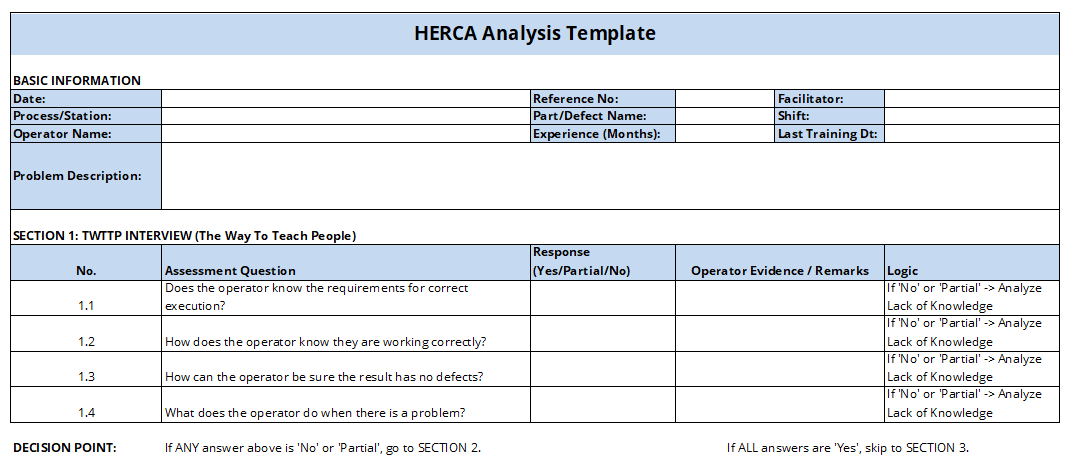
4. The First Step: TWTTP
Before starting HERCA, many World Class Manufacturing organizations first use TWTTP, which stands for The Way To Teach People.
TWTTP is used to check whether the operator actually understands the job being performed.
In many cases, organizations assume that because training was given, the operator knows exactly what to do.
But HERCA and TWTTP challenge that assumption.
The operator is usually asked simple but important questions such as:
- What needs to be done?
- How do you do it correctly?
- How do you know it is correct?
- What should you do if something is wrong?
- What are the important characteristics to check?
- What defect can happen if the step is missed?
- What is the reaction plan if an abnormality is found?
If the operator cannot answer these questions clearly, then the issue may not be operator negligence.
It may be a training problem.
It may mean that the work instruction is weak, the process is not standardized, the trainer was ineffective, or the operator was never properly qualified for the task.
This is important from an IATF 16949 perspective because the standard expects organizations to ensure competence, awareness, and process understanding rather than only maintaining training records.
In many factories, training records are available, but actual operator understanding is still weak.
TWTTP helps expose that gap before moving into deeper HERCA analysis.
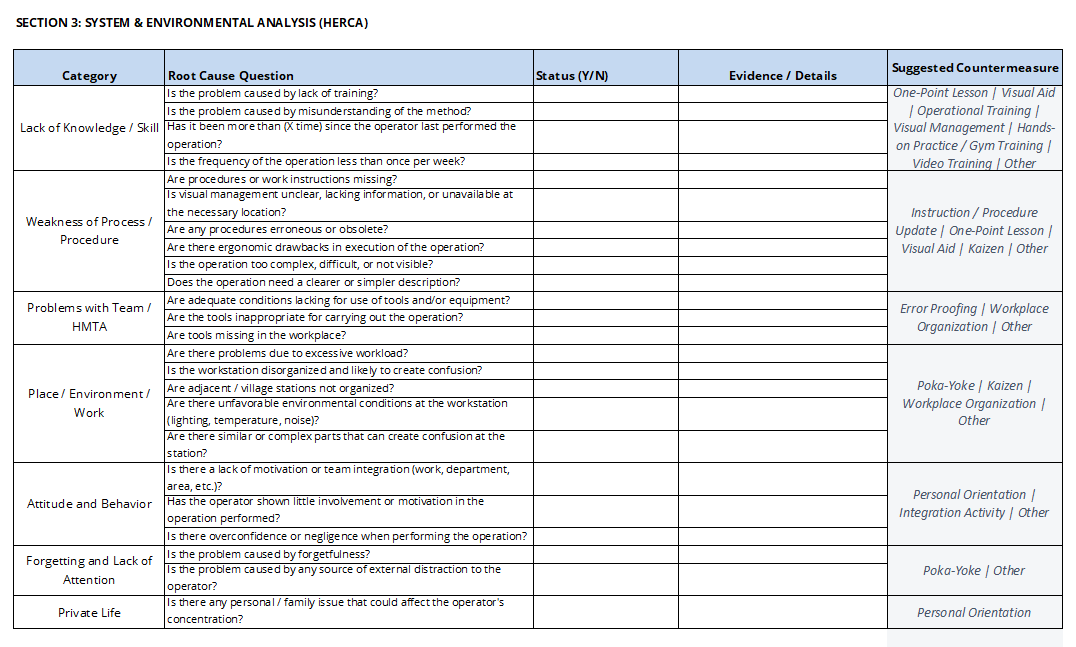
5. Typical Categories in HERCA
Once TWTTP is completed, HERCA looks deeper into the different conditions that may have contributed to the mistake.
The first category is lack of knowledge or skill.
The operator may not have understood the process fully, may not know the correct inspection method, may not know how to use the gauge, or may not understand the defect criteria.
The second category is weak process or procedure.
The work instruction may be unclear, the process may be too complex, critical steps may not be highlighted, or there may be no defined reaction plan if something goes wrong.
The third category is tools and equipment.
The wrong tool may have been used. The fixture may be damaged. The gauge may be unavailable or out of calibration. The machine setting may not be locked. There may be no poka-yoke to prevent wrong loading or wrong orientation.
The fourth category is workplace conditions.
Poor lighting, high noise, excessive heat, congestion, poor ergonomics, unclear material flow, similar-looking parts, or poor workstation layout can all increase the possibility of human error.
The fifth category is behavior and attention.
Fatigue, rushing, overconfidence, lack of concentration, multitasking, stress, and poor discipline can affect performance, especially in repetitive or high-pressure environments.
The final category is personal factors.
Sometimes issues outside work such as health, sleep, family problems, or personal stress can also influence performance.
The strength of HERCA is that it does not stop at one category. It forces the team to look at all possible causes before deciding what the real root cause is.
6. What Makes HERCA Different?
The biggest difference with HERCA is that it accepts that people can make mistakes.
Instead of expecting operators to be perfect all the time, HERCA focuses on building systems that make mistakes difficult, visible, or impossible.
For example, if a wrong part can be loaded in a fixture, HERCA does not stop at saying the operator loaded the wrong part.
It asks why the fixture allowed the wrong part to fit.
If an operator misses an inspection step, HERCA does not stop at saying the operator forgot.
It asks why there was no visual reminder, no first-off approval, no layered audit, or no poka-yoke to prevent the miss.
This is why HERCA connects strongly with many IATF 16949 expectations such as:
- Standardized work
- Visual management
- Layered process audits
- Error proofing
- Control Plan effectiveness
- PFMEA updates
- Reaction plans
- Operator competency
- Traceability
- First-off approval
- Escalation process
In simple words, HERCA changes the thinking from:
“How do we stop this operator from making the mistake again?”
to:
“How do we stop anyone from making the same mistake again?”
That is what makes the approach much stronger and more sustainable.
7. Typical Actions After HERCA
A good HERCA study should always end with practical actions.
If the final action is only “retrain the operator,” then the analysis is usually weak.
Retraining may still be required, but it should not be the only action.
The actions should address the real causes identified during the study.
Typical actions after HERCA may include:
- Improving work instructions with clearer steps and pictures
- Adding visual aids at the workstation
- Improving operator training and qualification process
- Adding poka-yoke devices to prevent wrong loading or wrong assembly
- Improving fixture design
- Reducing process complexity
- Improving workstation layout and ergonomics
- Improving lighting and workplace conditions
- Strengthening layered process audits
- Adding first-off approval and setup verification
- Improving Control Plan and reaction plans
- Improving traceability and material identification
- Improving supervision and escalation mechanism
- Increasing frequency of inspection for critical characteristics
- Updating PFMEA based on the findings
From an IATF 16949 perspective, the important point is that the action should not only correct the current issue. It should also reduce the chance of recurrence across shifts, operators, machines, and future production lots.
8. HERCA in Manufacturing Environments
HERCA can be used in almost every manufacturing process where human involvement exists.
It is especially useful in machining, welding, fabrication, assembly, inspection, testing, packing, and dispatch activities.
For example, in machining operations, HERCA can help identify why the wrong program was selected, why a setup was missed, or why the wrong gauge was used.
In welding, it can help investigate why weld parameters were not followed, why the wrong welding consumable was used, or why visual inspection was missed.
In inspection areas, HERCA can help understand why a defect escaped, why the wrong sample size was checked, or why an out-of-specification part was accepted.
HERCA becomes even more important in high-mix and low-volume environments where operators handle many different part numbers, process routes, drawings, fixtures, and gauges.
In such environments, the chances of wrong part selection, missed inspection, wrong setup, incorrect loading, and mix-up are naturally much higher.
This is one reason why suppliers working with complex products, multiple variants, and frequent changeovers should strongly consider using HERCA as part of their corrective action process.
It helps create a more disciplined and mistake-resistant system rather than depending only on operator memory and experience.
9. Common Mistakes During HERCA
Many organizations say they are using HERCA, but in reality they still follow the old approach of blaming the operator.
One common mistake is jumping directly to conclusions before gathering facts from the workplace.
Sometimes the investigation is completed in a meeting room without even visiting the machine, workstation, tool, fixture, or operator involved.
Another common mistake is treating retraining as the only corrective action.
If the same system, layout, tools, instructions, and process conditions remain unchanged, the issue is likely to happen again.
Some organizations also ignore factors such as poor lighting, confusing part identification, missing gauges, workstation congestion, or unrealistic production pressure.
These conditions may be major contributors to the error, but they are often not discussed.
Another weakness is not involving supervisors, maintenance, quality, production, and operators together during the study.
HERCA becomes much stronger when different functions participate because the real cause is often spread across multiple departments.
Finally, many organizations fail to check whether the actions were actually effective.
They close the corrective action quickly, but do not verify whether the issue reduced in the following weeks or months. Under IATF 16949, effectiveness verification is just as important as defining the action itself.
10. Final Thoughts
The biggest strength of HERCA is that it changes the question from:
“Who made the mistake?”
to:
“Why was the mistake possible?”
That small change in thinking can make a huge difference.
It helps organizations move beyond blame and start focusing on stronger systems, better controls, improved training, clearer work instructions, and more effective workplace design.
From an IATF 16949 perspective, this is extremely important because the standard expects organizations to identify true root causes and implement actions that prevent recurrence.
In many factories, the operator becomes the easiest person to blame because they are the last person who touched the product.
But in reality, the system around the operator is often the real cause.
People do not usually come to work intending to make mistakes.
Most mistakes happen because the process allowed the mistake to happen.
HERCA helps organizations recognise that reality and build processes that are more robust, more repeatable, and less dependent on individual memory or experience.
I also have an editable HERCA and TWTTP Excel template that can help teams move beyond operator blame and identify the real causes behind defects and escapes.
Happy to share it with my first-degree connections.