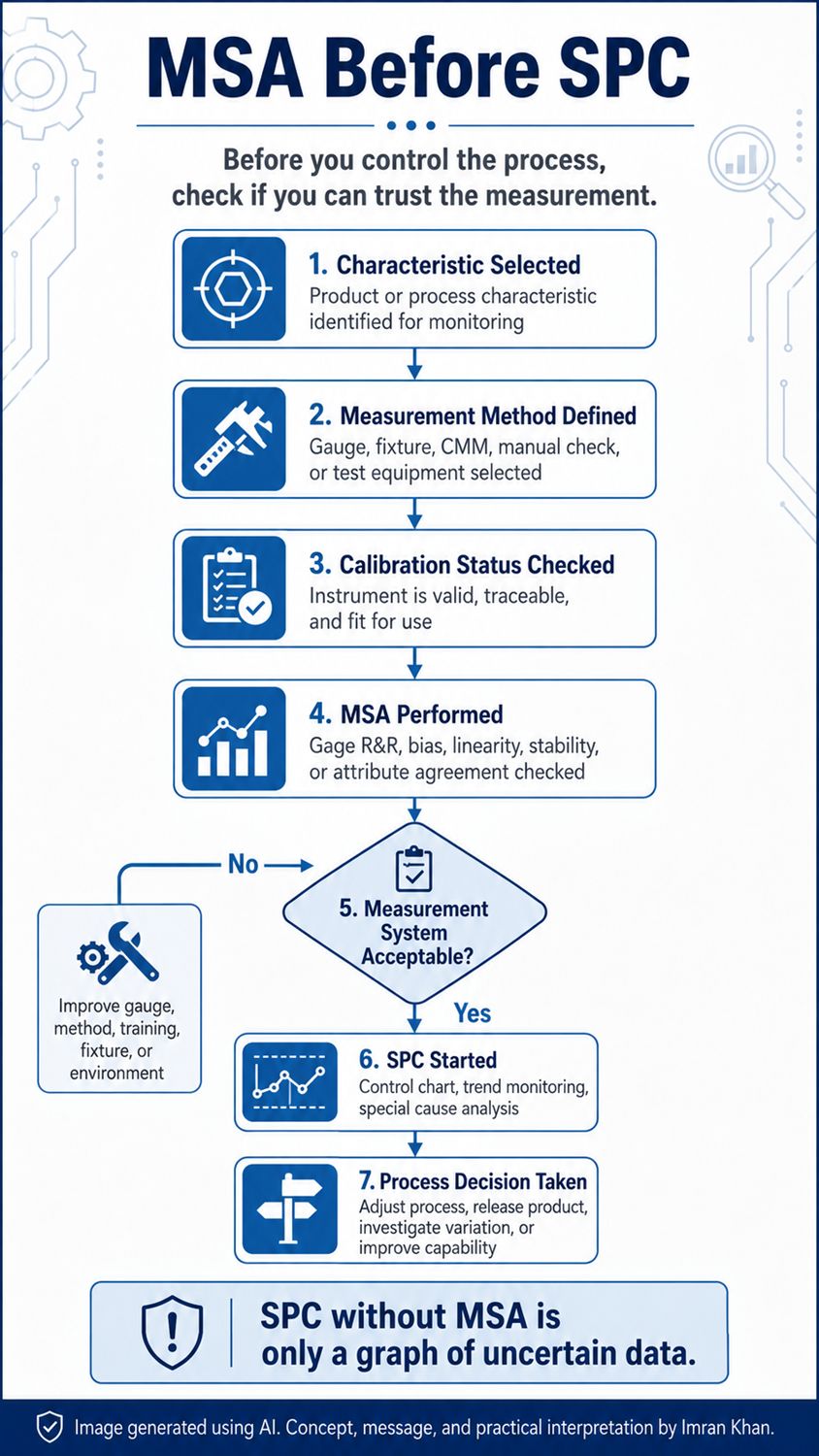
MSA Before SPC
Before you control the process, check if you can trust the measurement.
Many organizations start SPC because the process is important.
But one question is often missed:
Is the measurement system capable enough to support that decision?
If the data is not reliable, the control chart may look professional, but the decision can still be wrong.
━━━━━━━━━━━━━━━━━━
Where the risk starts
SPC depends on data.
But data depends on the measurement system.
If the gauge, method, operator, fixture, or environment is weak, then the chart may show measurement variation instead of process variation.
That means:
• A stable process may look unstable
• An unstable process may look stable
• A capability result may look better than reality
• A process adjustment may be made for the wrong reason
• A product decision may be based on doubtful evidence
This is why MSA is not just a format.
It is the foundation of data credibility.
━━━━━━━━━━━━━━━━━━
The right flow
Before starting SPC, the flow should be clear:
1 Characteristic selected
2 Measurement method defined
3 Calibration status checked
4 MSA performed
5 Measurement system accepted
6 SPC started
7 Process decision taken
Only after this sequence does the control chart become meaningful.
Otherwise, SPC becomes a graph with uncertain data.
━━━━━━━━━━━━━━━━━━
The practical message
In IATF 16949, data-based decision making is important.
But the quality of the decision depends on the quality of the data.
And the quality of the data depends on the measurement system.
SPC without MSA is only a graph of uncertain data.
What is your view?
Do organizations give enough importance to MSA before starting SPC?
#IATF16949 #MSA #SPC #QualityManagement #AutomotiveQuality #ProcessControl #MeasurementSystemAnalysis #ManufacturingExcellence