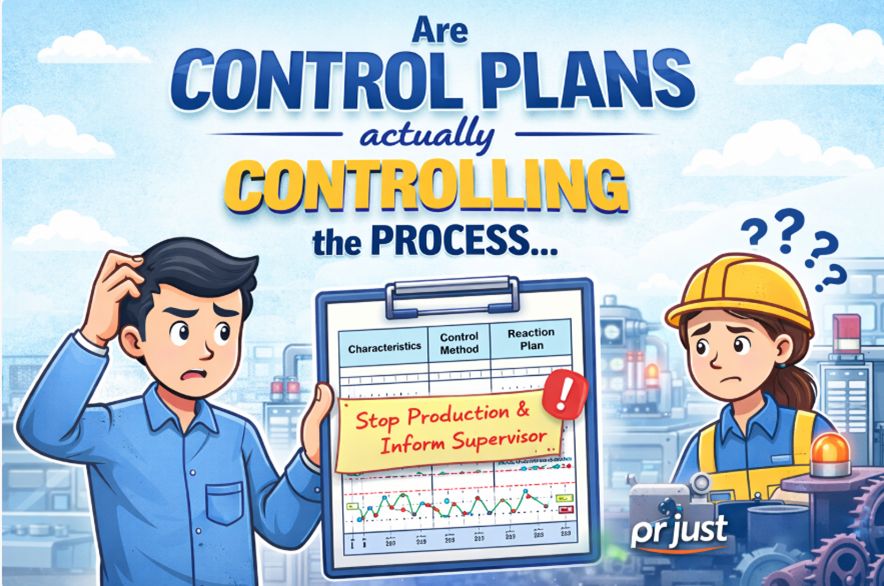
Are Control Plans actually controlling the process... or just documenting it?
Most Control Plans look perfect on paper.
• Every characteristic listed
• Every method defined
• Every frequency mentioned
• Every reaction plan written
But go to the shop floor...
And you’ll often see a different reality:
• Adjustments happening between inspections
• Variation controlled by operator experience
• SPC charts filled... but not used
• Reaction plans that exist... but don’t work
Take the typical reaction plan: “Stop production and inform supervisor.”
At first glance, it looks correct. But if you think deeper...
This is not a complete reaction plan. It’s just an instruction to escalate.
What’s missing?
A real reaction plan should define:
• What happens to suspected parts?
• From which point do we start containment?
• What immediate process correction is required?
• Who takes the first action?
• When can production restart?
Without this, the process is not controlled. It is only paused... and left to interpretation.
The uncomfortable truth is that many Control Plans are:
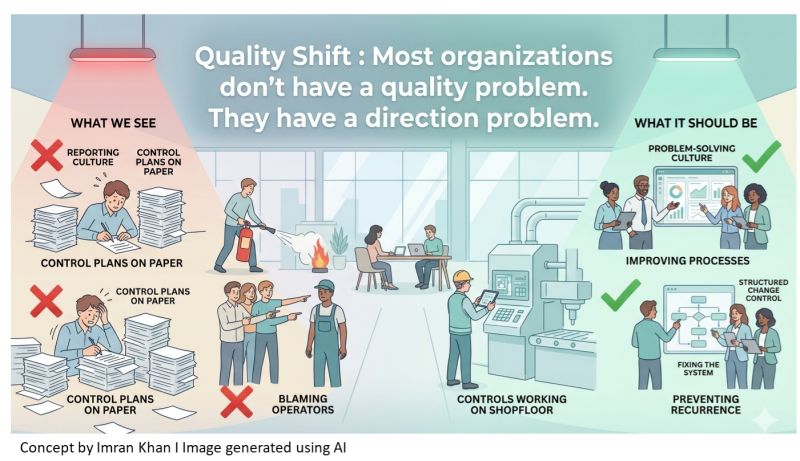
• Inspection-driven, not control-driven
• Focused on detection, not prevention
• Built for audits, not for real-time execution
So what is actually controlling your process:
1. The Control Plan?
2. The Work Instruction?
3. The operator’s experience?
4. Or post-failure firefighting?
Maybe it’s time to rethink:
From: “We have a Control Plan”
To: “Our process is actually under control”
Let’s discuss: In your experience, what truly controls the process on the shop floor?
#Quality #IATF16949 #Manufacturing #SPC #ProcessControl #Automotive #OperationalExcellence #QualityEngineering #ContinuousImprovement